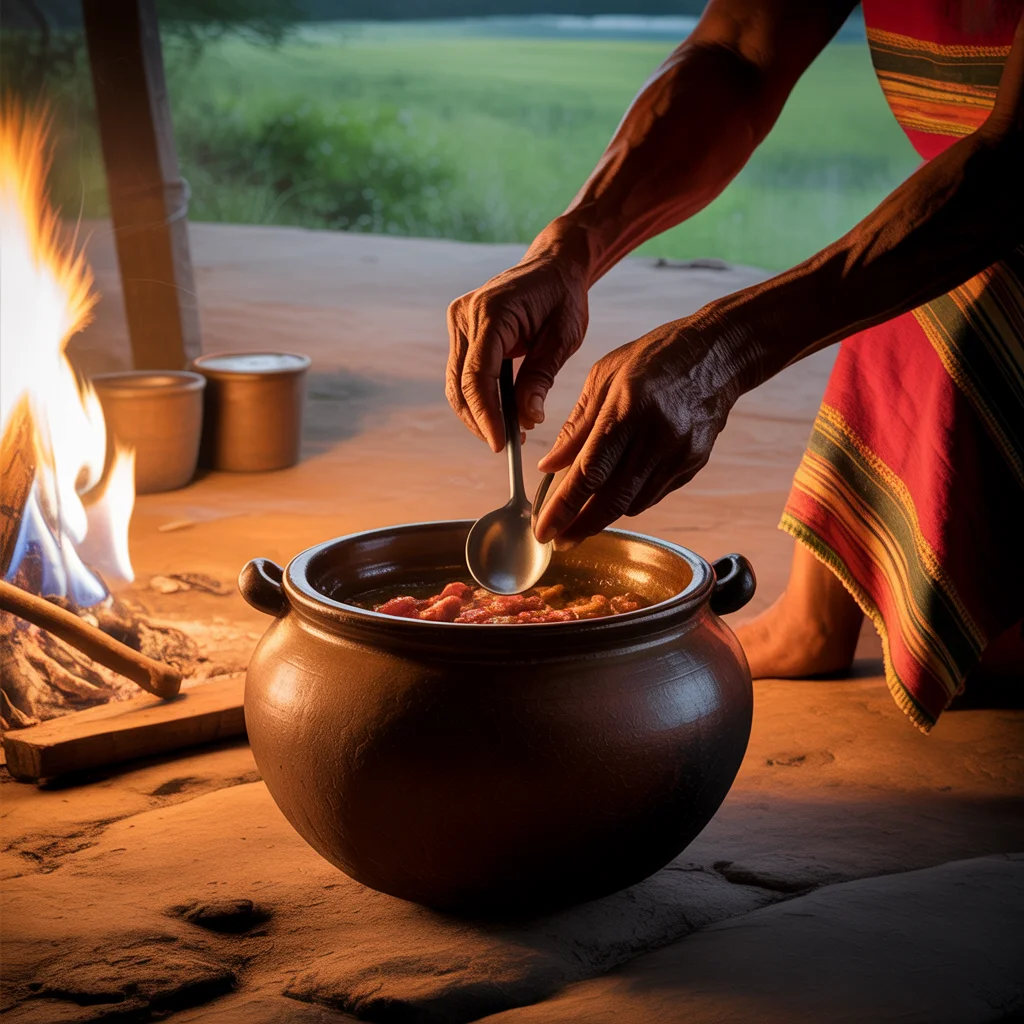
The kitchen as resistance: what those who survived eat
In Brazil’s indigenous and quilombola communities, preserving a recipe is a political act
By gastronomizaê · 2026-04-14
There is a cuisine in Brazil that isn’t in the gastronomic guides. It doesn’t have a chef with international experience, it doesn’t have a dining room with reservations, it doesn’t have dish descriptions on glossy paper. But it has existed for centuries, survived genocide and slavery, and carries techniques and knowledge that no culinary school in the world teaches — because they were born here, developed here, and survived here against odds that should have destroyed them.
Indigenous and quilombola cuisine is active resistance. Not metaphorically — in the concrete practice of planting, harvesting, preparing and transmitting.
What the kitchen preserves that writing did not preserve
The Guarani communities of Southern Brazil have been planting avati-morotî corn for at least 10,000 years. The variety doesn’t appear in any commercial seed bank. It survived because Guarani women saved their seeds from generation to generation, planted them in backyards, saved the most robust grains before each harvest, and taught their daughters. Official agronomic research has only recently begun to catalog what indigenous communities have kept alive for millennia through pure cultural determination.
The same applies to the backyard peanuts of the Cerrado, which have a completely different genetic profile from commercial peanuts. To feijão-macassar, an African legacy that arrived in the hands of enslaved people and persists in the Northeast. To the purple taro cará-roxo that quilombola communities in Vale do Ribeira cultivate in agroforestry systems that mimic the original forest.
Each of these varieties carries history, technique and identity. When they disappear, something irreplaceable disappears.
Tereza Sateré-Mawé and the guaraná that didn’t become a commodity
Tereza, who preferred not to have her surname published, is one of the guardians of guaraná cultivated by the Sateré-Mawé people in Amazonas. Sateré-Mawé guaraná is different from commercially cultivated guaraná: it has higher caffeine content, more complex flavor, and is harvested and processed manually, without chemicals, and at a pace that respects the plant’s seasonality.
“Guaraná is sacred to us. It’s not a product, it’s family,” explains Tereza. “When the soft drink company came here offering to buy everything we produced, the answer was no. Because that’s not how we preserve knowledge.”
Sateré-Mawé guaraná is now exported directly to European chocolatiers and confectioners who pay premium prices for an ingredient with verifiable provenance and sustainable practices. The income stays in the community. So does the knowledge.
The cuisine that survived what these peoples survived is not folklore. It’s ancestral technology even more advanced than we recognize.
The women of Kalunga and the maintenance of a cuisine
Quilombo Kalunga, in northeastern Goiás, is Brazil’s largest quilombo. In its communities scattered throughout Chapada dos Veadeiros, older women still master a cuisine that mixes African techniques with Cerrado ingredients: pamonha made from crioulo corn, pequi with cateto rice, chicken with licuri, feijão-andu broth with maxixe.
These recipes aren’t written down. They exist in the bodily memory of the women who prepare them, in the movements of kneading, beating, seasoning that were transmitted beside the wood stove for generations. When the young person from the community goes to the city to study, part of that memory is at risk.
Projects like the quilombola recipe documentation promoted by some federal universities try to capture this knowledge before it’s lost. But the quilombolas themselves recognize that the document doesn’t capture what’s essential — the technique lives in the doing, not in the describing.
The problem of recognition without redistribution
In the last ten years, Brazilian high gastronomy has discovered indigenous and quilombola ingredients. Tucupi, jambu, baru, juçara, pequi — these names appear on menus at starred restaurants in São Paulo and Rio. This is, in principle, good: it creates demand, values ingredients, expands the horizon of what’s considered a gastronomic ingredient.
But there’s a problem with how this frequently happens: the ingredient travels to the starred restaurant, but the knowledge that accompanies it stays behind. The chef learns to use jambu, but doesn’t learn — and rarely pays for — the centuries of Paraense knowledge that defined how this ingredient is cultivated, harvested and combined. Baru appears on the menu without the geraizeiros of the Cerrado who collect it seeing any return from the prestige their products are generating in urban centers.
Recognition without redistribution is appropriation with celebratory vocabulary.
What honest gastronomy should do
There’s no simple formula, but there are practices that make a difference:
Real traceability. Not “native ingredients” on the menu — name of the people, the community, the specific producer.
Direct relationship. Chefs who work directly with indigenous and quilombola communities, paying prices that reflect cultural value and not just production cost.
Credit transmission. When an indigenous technique appears in a high gastronomy dish, say where it came from. Not as curiosity — as recognition.
Political pressure. Indigenous land demarcation is also a matter of food security and gastronomic biodiversity preservation. Chefs and gastronomic critics who care about native ingredients have direct interest in supporting these demarcations.
What you can do with what you eat
The kitchen as resistance isn’t just a matter for communities that need to resist. It’s also, increasingly, a project for everyone who eats — which is everyone.
Every time you seek out, pay for and eat an ingredient of traceable indigenous or quilombola provenance, you’re participating in a recognition system that goes beyond flavor. You’re saying, with money and attention, that the knowledge that survived genocide and slavery to reach you matters and deserves to continue existing.
This is perhaps the most political statement a forkful can carry.