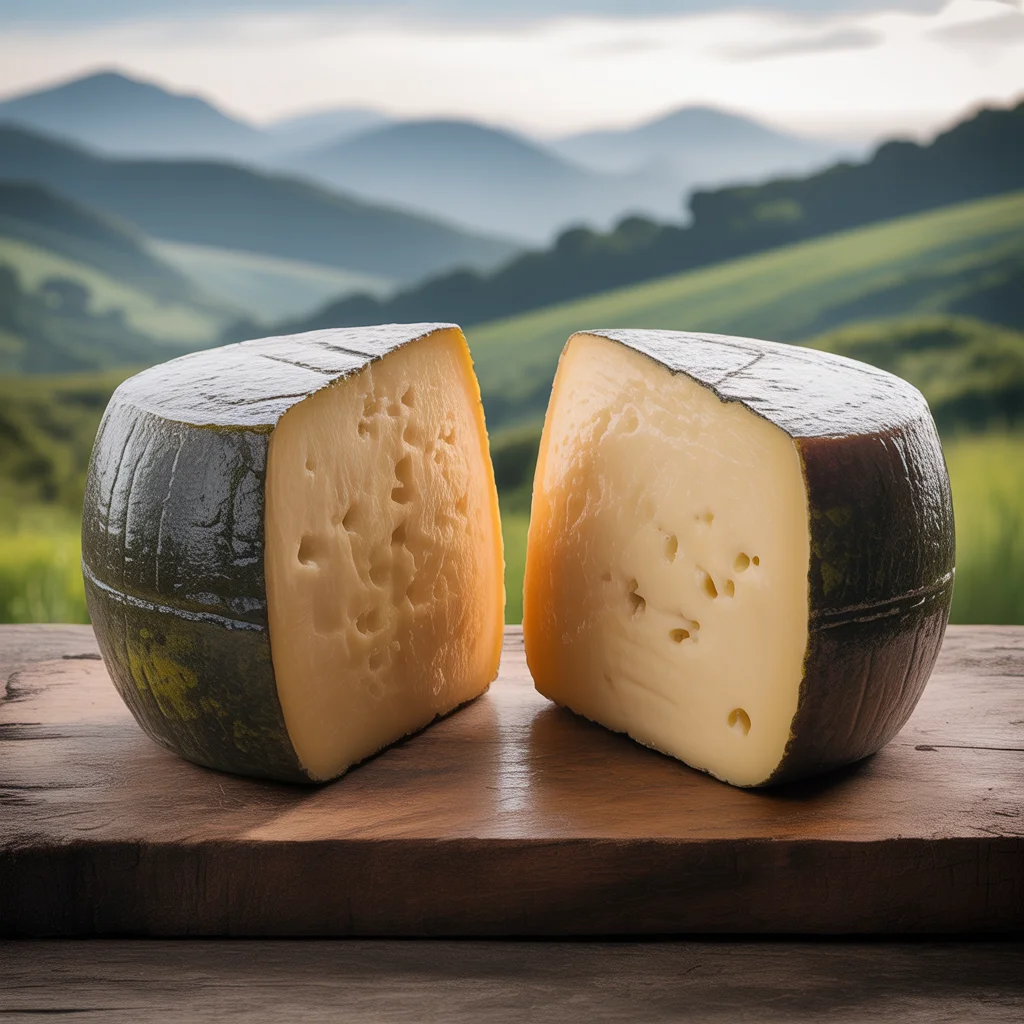
Serra da Canastra: the mountain that defined what cheese is in Brazil
Why cheese born at 1,300 meters altitude is not the same as cheese born in the valley — and what this terroir reveals about how we eat
By gastronomizaê · Serra da Canastra, MG · 2026-04-14
There’s a point on the road that climbs toward Serra da Canastra where the air changes. The temperature drops, humidity increases, and the green of the pastures stops being the green of agribusiness to become something more ancient and more irregular. This air matters. This pasture matters. And the cheese born here is different from any other produced in Brazil precisely because this air and this pasture are inimitable.
Queijo Minas Artesanal da Canastra has had protected geographical indication since 2012. But what this means in practice is more complex than a stamp: it means that the terroir — a word borrowed from the wine world but absolutely applicable here — produces milk with specific microbiological composition that no other pasture reproduces, and that this milk, artisanally curdled and cured in the mountain air, transforms into something that exists only in that place.
What altitude does
Serra da Canastra sits between 900 and 1,496 meters. At this range, the climate is mild even in summer, with cold nights that favor slow curing. The native grasses that grow at this altitude — braquiária is a minority here, capim-gordura and Cerrado natives still exist — produce milk with fat and protein content different from milk from warmer valleys.
The result in curing: a rind that develops from outside to inside at controlled speed, forming a firm crust while the interior remains moist and elastic. The flavor that emerges in this process is slightly acidic, with notes of butter and herbs, and a long finish that industry has never managed to reproduce at scale.
The cheesemaker and the pingo
The technical secret of Canastra lies in the “pingo” — the whey that drains naturally from the cheese during curing and contains the lactic bacteria from the specific farm where it was produced. This whey is added to the next batch of milk as natural starter, creating microbial continuity that links each cheese to the previous one, going back decades.
Each farm has its own pingo. This means that cheese from Fazenda Mirante, in São Roque de Minas, has a different signature from cheese from Fazenda do Brejão, three kilometers away. Same altitude, same air, but different pingos — and therefore different cheeses. An experienced cheese sommelier can distinguish them.
“The pingo is the farm’s memory. When you eat my cheese, you’re eating something that carries the history of this place for more than thirty years.”
— Dona Aparecida, producer in São Roque de Minas
The sanitary conflict
For many years, Brazilian sanitary legislation prohibited interstate commercialization of artisanal cheeses aged for less than 60 days — a period that destroyed the sensory profile of Canastra, which is best between 15 and 45 days. Producers were fined, cheeses were confiscated, and the absurdity of a law designed for industrial cheeses being applied to artisanal products was exposed.
Partial regularization came through pressure from producers and a coalition of chefs, researchers and consumers who understood that Brazilian artisanal cheeses are edible cultural heritage. Today, with Normative Instruction 57 from MAPA, cheeses aged for more than 22 days can circulate — but bureaucracy persists and many small producers still operate informally.
How it reaches the table
Canastra cheese that appears in starred restaurants and good urban cheese shops is, increasingly, traceable: with the producer’s name, aging time and sometimes the pingo number. This isn’t marketing — it’s information that allows the cook to use it more intelligently.
A young Canastra (15 to 22 days) has rubbery texture and mild flavor, excellent for melting in hot dishes. An aged Canastra (30 to 45 days) develops texture that crumbles slightly and more pronounced flavor, ideal for serving simply, with native bee honey or jabuticaba jelly. An old Canastra (more than 60 days) approaches a rustic pecorino, with visible tyrosine crystals and intensity that calls for a tannic wine or aged cachaça.
Why this matters beyond flavor
The artisanal cheesemaker from Canastra earns around R$ 25 to R$ 40 per kilo in the market. The industrial equivalent costs R$ 18 at any supermarket. The price difference isn’t whim — it’s the account of aging time, native pasture, inherited pingo, and labor that doesn’t have industrial scale.
When you buy a Canastra of proven origin, you’re sustaining a millennial agricultural practice that preserves the Cerrado, keeps families in the countryside, and produces a food that no factory in the world can replicate.
It is, perhaps, the most flavorful argument for thinking about where what we eat comes from.