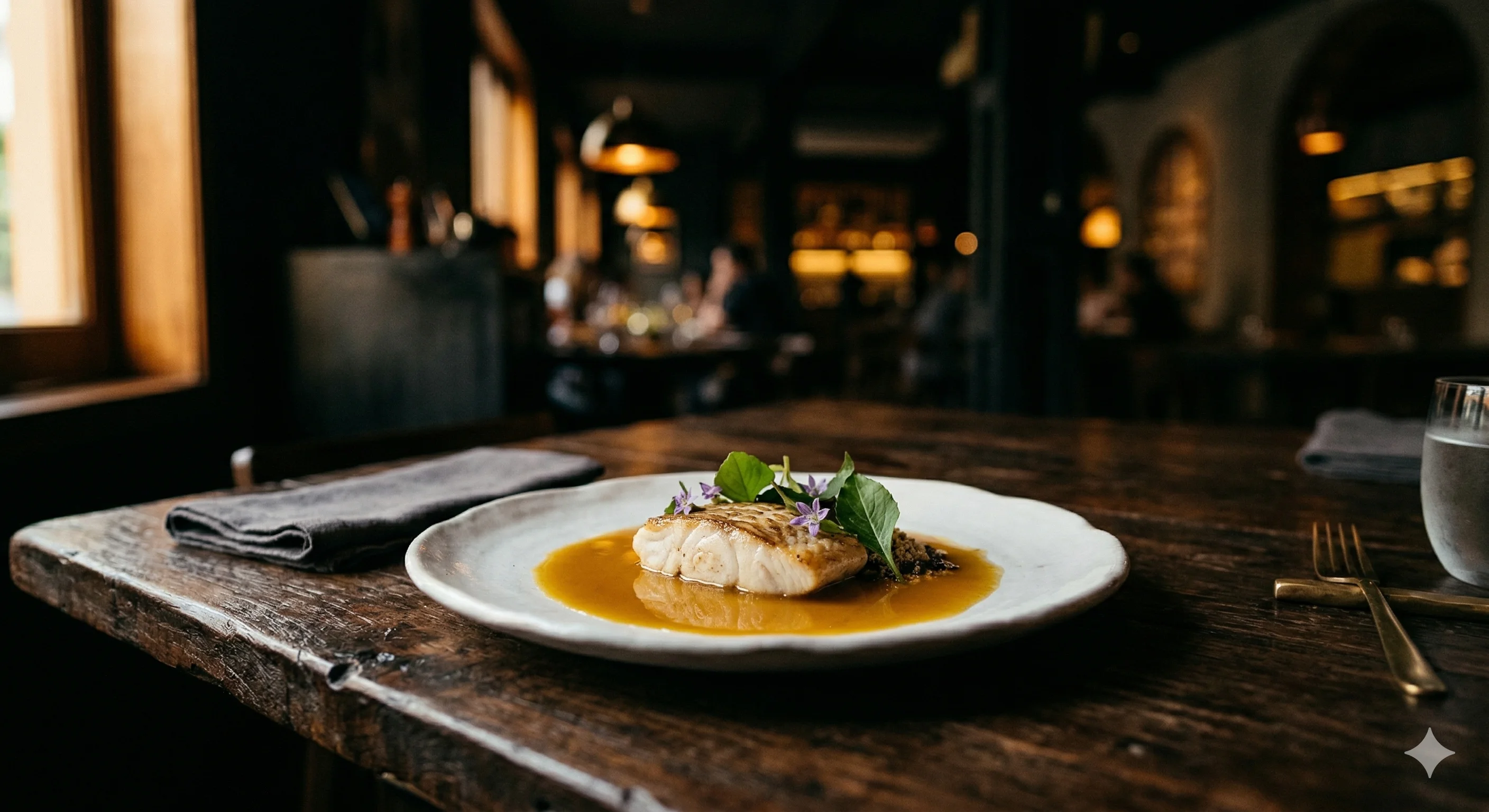
The new Brazil on Alex Atala’s plate
How the D.O.M. chef continues to reinvent Brazilian cuisine — and why it still matters
By gastronomizaê · São Paulo · 2026
There’s a moment, during a meal at D.O.M., when food stops being food and becomes argument. Not the didactic argument of explanatory menus, but one that emerges from within the plate and lands on the palate before reaching reason. It’s when tucupi appears not as a northeastern citation, but as structure — acidic, deep, alive — and you realize that Alex Atala isn’t presenting Brazil to the world. He’s reconstructing Brazil for himself.
Atala has been, for more than two decades, the most cited name when it comes to high-voltage Brazilian cuisine. But reducing his work to the label of “Amazon ambassador” misses the point. The D.O.M. chef — who for years inhabited the top of The World’s 50 Best Restaurants list — didn’t bring Brazil to the fine dining table. He brought fine dining into Brazil.
“I’m not interested in representing the country. I’m interested in understanding it. These are very different things.” — Alex Atala
The ingredient as political gesture
The shift in Atala’s work didn’t happen all at once. It was gradual, accumulative, sometimes contradictory. In D.O.M.’s early years, the reference was Europe — French technique, minimalist aesthetics, the product as silent protagonist. Brazil entered through ingredients but exited through method.
Over time, the equation inverted. The ingredient stopped being exoticism and became the epistemological starting point. Jambu isn’t on the plate because it’s unusual — it’s there because it’s the most honest. Saúva ant isn’t provocation: it’s protein, it’s umami, it’s the forest saying it belongs anywhere serious thinking occurs.
It’s in this displacement that Atala’s work becomes political without needing to shout. When a restaurant with D.O.M.’s pedigree serves unadorned açaí, fermented pupunha or native Cerrado vanilla, it’s saying something about value — about what deserves attention, about who produces, about what Brazil chooses to see in itself.
D.O.M. in 2026
The experience at D.O.M. today isn’t the same as ten years ago — and it shouldn’t be. The current tasting menu navigates between seven and twelve courses, depending on the season and the kitchen’s mood. Proteins still appear but have ceded protagonism to roots, leaves, fungi. Texture has taken the place of weight. Balance has become more complex, drier, more confident.
Service continues to be one of the restaurant’s great things. Not the performative service of houses afraid of silence, but one that knows when to speak and when to let the plate breathe. The sommeliers have been building a cellar with growing focus on natural wines and South American producers — a choice that converses with the kitchen’s ethos without needing explanation.
Why Atala still matters
In a gastronomic scene that changes quickly — where every month a new “product-driven” restaurant is born and the word “terroir” has become marketing — D.O.M. remains as reference for a simple reason: accumulated coherence. Atala didn’t change language every time the wind shifted. He deepened.
This doesn’t mean the restaurant is untouchable. There are legitimate criticisms about accessibility, about the cost of the experience and about whether the fine dining model can really transform production chains or merely celebrate them on porcelain plates. These are serious questions, and Atala himself raises them.
But there’s something rare happening there, on Rua Barão de Capanema: a kitchen that still believes Brazil is a sufficient argument — without needing translation, without needing to ask permission.
Technical Details
D.O.M. Address: Rua Barão de Capanema, 549 — Jardins, São Paulo · SP Hours: Tuesday to Saturday · Lunch and dinner Price: Tasting menu from R$ 850 per person (without wine pairing) Reservations: dom.restaurant Category: Fine Dining · Rating: ★★★★★