The third star and the encounter with one’s own voice
How Luiz Filipe Souza transformed Evvai into a manifesto of contemporary Brazilian gastronomy
By gastronomizaê · 2026-04-18
There’s something profoundly Brazilian in the trajectory that led Evvai to three Michelin stars. Not just for the obvious reasons — the appreciation of national ingredients or the reinterpretation of local classics — but for the way chef Luiz Filipe Souza built his culinary language: without haste, with the patience of someone who understands that maturity isn’t conquered, it’s cultivated.
The new menu at this São Paulo restaurant arrives as a declaration of gastronomic independence. Where once there was a search for validation through impeccable European techniques, today we find a chef who has embraced his references without hiding behind them. The dish that opens the sequence — a native oyster served with fermented tapioca and jambu oil — translates this change with silent eloquence.
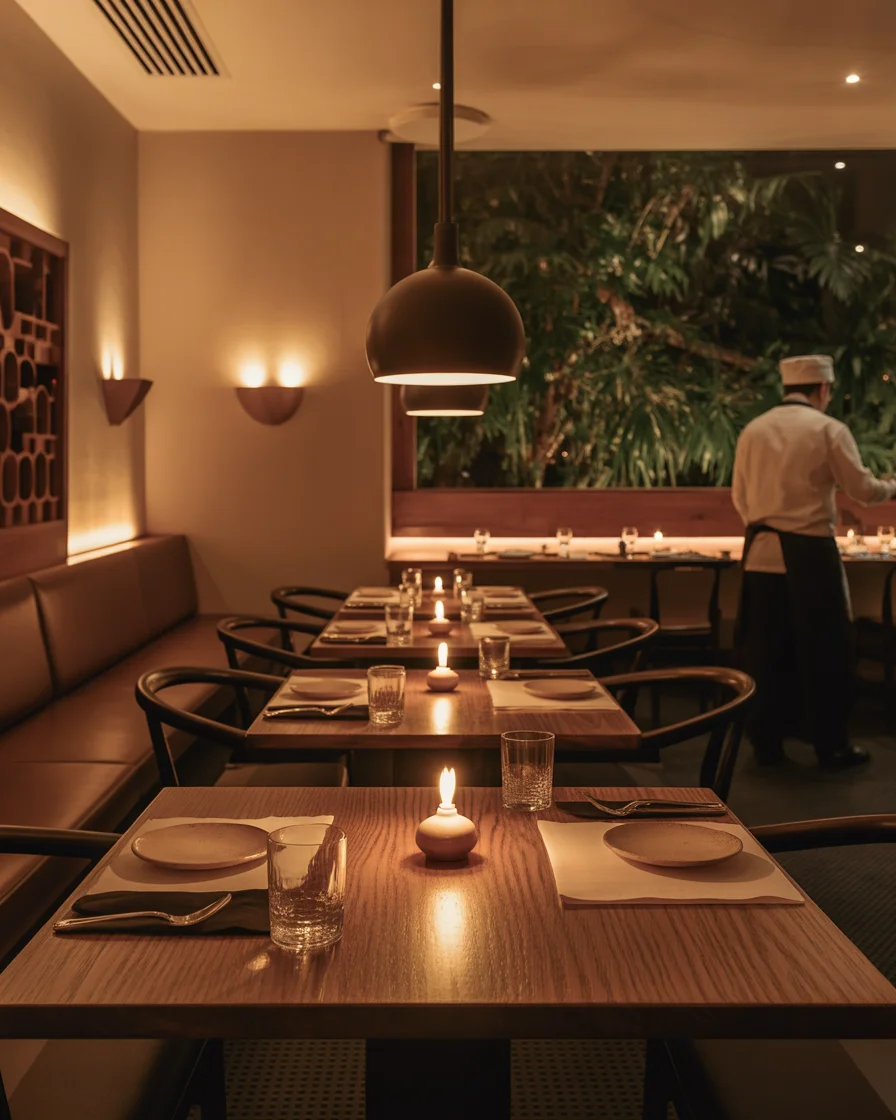
The Evvai dining room remains the same: bare walls, light wood tables, that yellow light that invites intimacy. But there’s a different energy circulating among the 28 seats. It’s as if the space breathes more naturally, freed from the tension of those who still needed to prove something to the world.
“I stopped cooking for others and started cooking for myself,” Luiz Filipe says about the menu’s evolution. “Paradoxically, that’s when people connected most with our food.”
This connection manifests tangibly in the new 16-course tasting menu. The chef abandons overly elaborate preparations in favor of dishes that allow ingredients to express their personality. The robalo with tucumã broth and castanha-do-pará doesn’t impress through technical complexity, but through the harmony between elements that seem to have been born to meet on the plate.
The achievement of the third Michelin star — an unprecedented feat for Brazilian gastronomy — represents more than individual recognition. It symbolizes the maturity of an entire generation of cooks who learned to translate external influences without losing their own identity. Luiz Filipe has become, involuntarily, the spokesperson for this transformation.
Watching the brigade work in the open kitchen, one perceives that this philosophy permeates the entire operation. The movements are precise, but not robotic. There’s room for adjustments, for intuition to season technique. It’s a valuable lesson for the new generation of Brazilian cooks: excellence doesn’t require sacrificing personality.
The menu closes with a dessert that synthesizes the restaurant’s entire discourse: a cupuaçu mousse accompanied by castanha cookie and castanha-do-pará milk ice cream. Technically impeccable, emotionally Brazilian, conceptually mature. It’s the recipe that Luiz Filipe took years to discover and that now offers itself as a map for those seeking their own path in national haute cuisine.
Evvai’s third star doesn’t just crown a chef or a restaurant. It celebrates a generation that found its voice without shouting, that conquered the world without losing its roots. And that, definitely, deserves to be tasted with the patience that every great transformation demands.